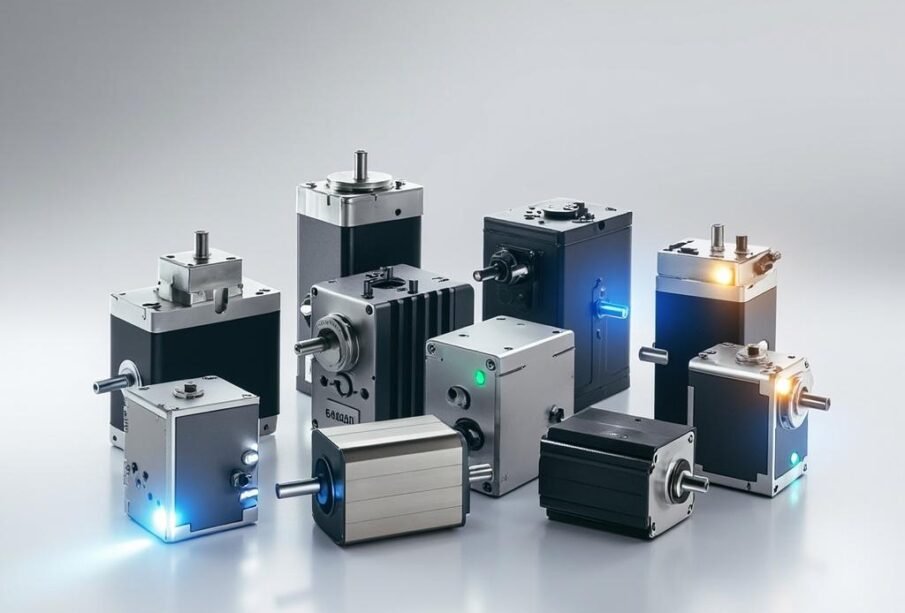
Precision motion control systems rely on servo motors as their core driving force, transforming electrical signals into accurate mechanical movement with remarkable repeatability and responsiveness. Whether you’re designing an automated manufacturing line, a robotic arm, a CNC machine, or a medical device, selecting the appropriate servo motor determines the ultimate performance, efficiency, and reliability of your system. The consequences of an improper selection extend far beyond mere performance degradation—they can result in catastrophic failures, costly downtime, and compromised product quality. This comprehensive guide walks you through every critical factor in servo motor selection, empowering you to make informed decisions that align perfectly with your precision motion control requirements.
Understanding Servo Motor Fundamentals
Before diving into selection criteria, you must understand what distinguishes a servo motor from conventional motors in precision motion control applications. A servo motor combines a motor, feedback device, controller, and drive into an integrated closed-loop system that continuously monitors and adjusts its position, velocity, and torque output. This real-time correction capability enables sub-micron positioning accuracy that open-loop systems simply cannot achieve.
Core Components of a Servo System
A complete servo system comprises four essential elements that work in concert to deliver precision motion:
- Servo Motor: The electromechanical conversion device, typically available in AC, DC, brushless, or stepper variants
- Encoder/Resolver: The feedback device measuring actual position and speed for closed-loop control
- Servo Drive: The power electronics converting DC/AC input into controlled motor phases
- Motion Controller: The intelligence commanding position/velocity trajectories to the drive
Types of Servo Motors for Precision Applications
Selecting the right servo motor type forms the foundation of your precision motion control system. Each motor technology offers distinct advantages tailored to specific application requirements, operating environments, and performance envelopes.
AC Synchronous Servo Motors
AC synchronous servo motors dominate high-performance industrial applications requiring continuous duty cycles, excellent thermal characteristics, and robust construction. These motors utilize permanent magnets on the rotor interacting with stator windings supplied by pulse-width modulated signals from the drive. They excel in applications demanding constant speed regulation, rapid acceleration profiles, and extended operational lifespans without maintenance interventions.
Brushless DC Servo Motors
Brushless DC (BLDC) servo motors offer superior power density, higher efficiency, and eliminated brush wear compared to brushed alternatives. The electronic commutation eliminates mechanical wear points, enabling operation in clean environments and applications demanding minimal maintenance intervals. BLDC motors provide exceptional dynamic response characteristics, making them ideal for high-speed packaging equipment, medical imaging systems, and aerospace servo mechanisms.
Linear Servo Motors
For applications requiring direct linear motion without mechanical transmission components, linear servo motors deliver unparalleled precision and dynamics. By eliminating gearboxes, lead screws, and belt-drive systems, linear motors achieve positioning accuracies measured in nanometers while eliminating backlash, compliance, and wear mechanisms inherent to rotary-to-linear conversions. Semiconductor fabrication, electron microscopy, and ultra-precision machining frequently employ linear servo technology.
⚠️ CRITICAL WARNING:
Never undersize your servo motor based solely on rated power requirements. Peak torque demands during acceleration, deceleration, and load transients typically exceed continuous ratings by 2-5 times. Always analyze your complete motion profile including friction variations, payload changes, and emergency stop scenarios before finalizing motor selection. Undersized motors experience thermal overload, reduced lifespan, and potential catastrophic failure during production runs.
Key Specifications and Parameters
Understanding servo motor specifications enables precise matching between motor capabilities and application demands. The following parameters require careful analysis during the selection process.
Torque Characteristics
Torque specifications define your motor’s mechanical output capability and directly influence system performance parameters including acceleration rates, positioning time, and load capacity. You must evaluate three distinct torque values:
- Continuous Torque: Sustained output capability at thermal equilibrium, determining normal operating performance
- Peak Torque: Maximum output for brief durations (typically 1-5 seconds), enabling rapid acceleration and deceleration profiles
- Stall Torque: Output when rotor is stationary, relevant for locked-rotor conditions and holding applications
Speed and Inertia Considerations
Motor speed requirements must align with your mechanical transmission system to achieve desired end-effector velocities while maintaining adequate torque reserves. The relationship between motor inertia and reflected load inertia significantly impacts system stability and response bandwidth. Industry best practices recommend servo motor load-to-motor inertia ratios not exceeding 3:1 for standard applications and 1:1 for high-precision positioning systems.
Feedback Device Resolution
The encoder resolution fundamentally limits your achievable positioning accuracy. Higher resolution feedback devices enable finer position measurement but introduce data processing challenges and potential noise sensitivity. Common encoder resolutions range from 2,000 pulses per revolution (basic applications) to 25-bit absolute resolution (ultra-precision systems achieving sub-arc-minute positioning accuracy).
| Parameter |
Low-Precision |
Standard Precision |
High Precision |
Ultra-Precision |
| Encoder Resolution |
2,000 – 4,096 CPR |
8,000 – 16,384 CPR |
17-bit – 20-bit |
21-bit – 25-bit |
| Repeatability |
±50 μm |
±5 μm |
±1 μm |
±0.1 μm |
| Typical Application |
Conveyors, simple automation |
Packaging, assembly |
CNC, inspection systems |
Semiconductor, metrology |
| Cost Index |
1x (Baseline) |
2-3x |
5-10x |
20-50x |
Application-Specific Selection Criteria
Different applications impose unique constraints and performance priorities that must inform your servo motor selection process. Analyzing your specific use case ensures optimal matching between motor capabilities and system requirements.
Industrial Automation and Robotics
Post Views: 16