Stepper Motors vs Servo Motors: Which is Best for Positioning Tasks?
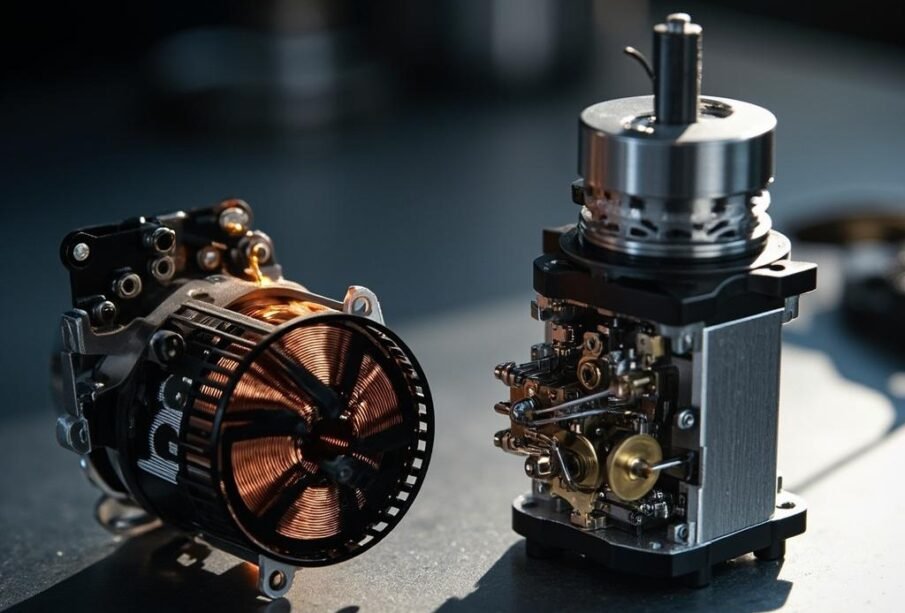
When it comes to precision motion control and positioning tasks, selecting the right motor technology can significantly impact your application’s performance, efficiency, and overall success. Two of the most commonly compared options in industrial automation, robotics, and precision engineering are stepper motors and servo motors. Both technologies offer distinct advantages and face specific limitations that make them more suitable for particular applications. Understanding the fundamental differences between these two motor types is essential for engineers, designers, and manufacturers who aim to optimize their positioning systems while managing costs and achieving desired operational specifications.
Understanding Stepper Motors: Open-Loop Precision
Stepper motors are brushless, synchronous electric motors that convert digital pulses into discrete mechanical rotations. Unlike conventional motors, stepper motors divide a full rotation into a large number of equal steps, allowing for precise positioning without requiring feedback systems. The motor operates on the principle of electromagnetic coils being energized in a specific sequence, causing the rotor to align with successive magnetic fields and move in incremental steps.
Key Characteristics of Stepper Motors
- Open-loop operation: Stepper motors operate without position feedback, making them simpler to control and less expensive to implement
- High holding torque: They can maintain a stationary position with significant torque when energized
- Excellent positional accuracy: Modern stepper motors can achieve step resolutions down to 0.9 degrees or even finer with microstepping techniques
- Simple drive electronics: Control is achieved through straightforward pulse signals sent to driver circuits
- Cost-effective solution: Generally less expensive than servo motors with comparable frame sizes
Understanding Servo Motors: Closed-Loop Excellence
Servo motors, particularly brushless DC servo motors and AC servo motors, represent a more sophisticated approach to motion control. These motors operate within a closed-loop feedback system that continuously monitors actual position, speed, and torque through encoders or resolvers. The controller compares the desired position with the actual position and makes real-time adjustments to minimize any error, resulting in exceptional accuracy and dynamic response characteristics.
Key Characteristics of Servo Motors
- Closed-loop feedback: Integrated encoders provide real-time position and speed data for precise control
- Superior dynamic performance: Faster acceleration, deceleration, and higher speed ranges than stepper motors
- Torque consistency: Maintains consistent torque output across varying speeds
- Automatic error correction: Automatically compensates for load variations and disturbances
- Higher power density: More compact for equivalent power output compared to stepper motors
Direct Comparison: Stepper vs. Servo Motors
To better understand which motor technology suits your positioning application, examining key performance parameters side by side provides valuable insights. The following comparison table highlights critical differences between stepper and servo motors across essential specifications.
| Parameter | Stepper Motor | Servo Motor |
|---|---|---|
| Control System | Open-loop (no feedback) | Closed-loop (with encoder) |
| Position Accuracy | Good (±5% of step angle) | Excellent (±0.01° or better) |
| Speed Range | Low to medium (up to 2000 RPM) | Medium to high (up to 5000+ RPM) |
| Torque at Low Speed | High holding torque | Moderate, requires gearing |
| Acceleration | Moderate | Excellent |
| Overload Capacity | Limited (can stall) | High (300% peak torque) |
| Maintenance | Low (brushless design) | Low (brushless design) |
| System Cost | Lower initial investment | Higher initial investment |
| Complexity | Simple integration | Requires tuning and setup |
Performance Analysis for Positioning Tasks
Positioning Accuracy and Repeatability
When evaluating positioning accuracy, servo motors generally hold a significant advantage. The continuous feedback loop in servo systems allows for real-time error correction, achieving positional accuracies measured in arc-minutes or even arc-seconds for high-precision applications. Stepper motors, while capable of good accuracy, may experience positional errors due to step loss under heavy loads or high speeds. However, modern microstepping techniques and enhanced driver technologies have substantially improved stepper motor accuracy, narrowing the gap for many mid-range applications.
Speed and Acceleration Characteristics
Servo motors excel in applications requiring high speeds and rapid accelerations. Their ability to maintain torque across a wide speed range and their sophisticated control algorithms enable smooth, dynamic motion profiles. Stepper motors, conversely, experience torque reduction at higher speeds due to the limitations of their drive systems and magnetic characteristics. For applications involving high-speed positioning or quick cycle times, servo motors typically deliver superior performance.
Torque Performance Considerations
The torque characteristics of each motor type present interesting trade-offs. Stepper motors offer excellent holding torque when stationary, making them ideal for applications where the load must remain fixed in position without power consumption concerns. Servo motors provide high peak torques for short durations, enabling them to handle sudden load changes and overload conditions more effectively. The choice depends on whether your application requires sustained low-speed torque or intermittent high-torque capability.
⚠️ Important Selection Warning
Stepper motors can lose steps (skip positions) under sudden overload conditions or when operating near maximum speed. If your application involves unpredictable loads or safety-critical positioning, always consider servo motors with their inherent overload protection and automatic error correction capabilities.
Application Suitability: When to Choose Each Technology
Ideal Applications for Stepper Motors
- 3D Printing: Desktop and prosumer 3D printers rely heavily on stepper motors for their cost-effectiveness and adequate precision for layered deposition processes
- Textile Machinery: Thread positioning and tension control benefit from stepper motors’ ability to hold position without continuous power
- Packaging Equipment: Medium-speed, precise indexing operations where cost optimization is prioritized over extreme speed
- Laser Cutting and Engraving: X-Y positioning systems where the relatively slow traversal speed aligns with stepper capabilities
- Medical Devices: Infusion pumps, liquid handling systems, and diagnostic equipment requiring reliable, maintenance-free operation
- Office Equipment: Printers, scanners, and copiers where cost, simplicity, and adequate performance meet design requirements
Ideal Applications for Servo Motors
- Robotics: Industrial robot arms, collaborative robots, and automated assembly systems requiring precise, dynamic motion control
- CNC Machining: High-speed cutting, milling, and drilling operations demanding rapid tool changes and precise positioning
- Automated Inspection: Vision systems and coordinate measuring machines where sub-micron accuracy is essential
- Aerospace Manufacturing: Composite layup machines, drilling rigs, and assembly fixtures requiring both speed and precision
- Semiconductor Processing: Wafer handling, pick-and-place operations, and lithography equipment with extremely tight tolerances
- Printing Presses: High-speed web printing where color registration and print quality depend on precise web tension control
Cost Considerations and Total Ownership
Initial acquisition cost often represents only a fraction of the total cost of ownership for motion control systems. When comparing stepper and servo solutions, consider not only the motor and drive electronics but also integration complexity, maintenance requirements, downtime costs, and system scalability. While servo systems typically require higher upfront investment for motors, drives, and more sophisticated controllers, they may deliver lower long-term costs through reduced maintenance, improved efficiency, and better performance utilization.