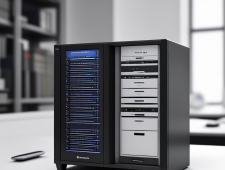

When it comes to equipping your cabinet with the right industrial power supply, there are numerous factors that need to be carefully considered. An appropriate industrial power supply is not just a component but the life - force of your cabinet system, which can significantly affect the performance, reliability, and longevity of the entire setup.

First and foremost, you need to assess the power requirements of your cabinet. This involves calculating the total power consumption of all the devices that will be installed in the cabinet. Different electrical components, such as servers, routers, and monitoring equipment, have varying power needs. Some high - end servers may demand a large amount of power, while smaller sensors or basic communication devices may consume relatively little. To accurately determine the power requirements, you should refer to the product manuals of each device. Add up the power ratings (usually in watts) of all the components to get an estimate of the total power. It's also advisable to add a safety margin, typically around 20 - 30%, to account for any future expansions or unexpected power surges.
The output voltage of the industrial power supply is another critical aspect. Most industrial equipment operates within a specific voltage range. For instance, some devices may require a standard 12V or 24V DC power supply, while others might need a higher - voltage AC supply. Using an incorrect voltage can lead to malfunctions, reduced efficiency, or even permanent damage to the equipment. You should make sure that the power supply can provide the exact voltage required by your cabinet's components. Moreover, it should maintain a stable output voltage under different load conditions. Fluctuations in voltage can cause errors in data transfer, sudden shutdowns, or overheating of components.
The form factor and physical dimensions of the power supply play a vital role as well. Cabinets have limited space, and the power supply must fit within the available area. You need to measure the interior space of your cabinet carefully and choose a power supply with the appropriate size. Additionally, consider the mounting options. Some power supplies are designed for rack - mounting, which is ideal for standard server cabinets. Others may be suitable for wall - mounting or direct installation inside the cabinet. A well - fitted power supply not only makes the installation process easier but also ensures proper ventilation and cooling.
Reliability and durability are non - negotiable when choosing an industrial power supply. Industrial environments can be harsh, with factors like temperature variations, humidity, dust, and vibrations. Look for power supplies that are built to withstand these challenging conditions. They should have a high Mean Time Between Failures (MTBF) rating, which indicates the average time a device can operate without failing. Moreover, they should be protected against over - voltage, over - current, and short - circuit situations. This protection can prevent damage to the power supply itself and the connected equipment.
Efficiency is an important factor both for economic and environmental reasons. A more efficient power supply consumes less energy, which translates into lower electricity bills in the long run. It also generates less heat, reducing the load on the cabinet's cooling system. When comparing different power supplies, look for those with high efficiency ratings, usually expressed as a percentage. Power supplies with 80 Plus certification are a good choice as they meet certain efficiency standards.
Compatibility with your cabinet's existing infrastructure and the overall system is also crucial. The power supply should be able to interface smoothly with the other electrical and electronic components in the cabinet. For example, it should have the right type of connectors to connect to the devices. Some power supplies come with modular connectors, which offer more flexibility in terms of cable management and customization.
After - sales support and warranty are often overlooked but very important. In case you encounter any problems with the power supply, having reliable technical support can save you a lot of time and trouble. A good warranty period also gives you peace of mind, knowing that the manufacturer stands behind their product. You should choose a vendor with a good reputation for customer service and reliable warranty policies.
In conclusion, choosing the right industrial power supply for your cabinet requires a comprehensive evaluation of multiple factors, from power requirements and voltage output to physical dimensions, reliability, efficiency, compatibility, and after - sales support. By taking the time to make an informed decision, you can ensure the smooth operation of your cabinet system and avoid potential problems in the future.