Edge Computing vs. Cloud Computing for Industrial Automation: Which is Better?
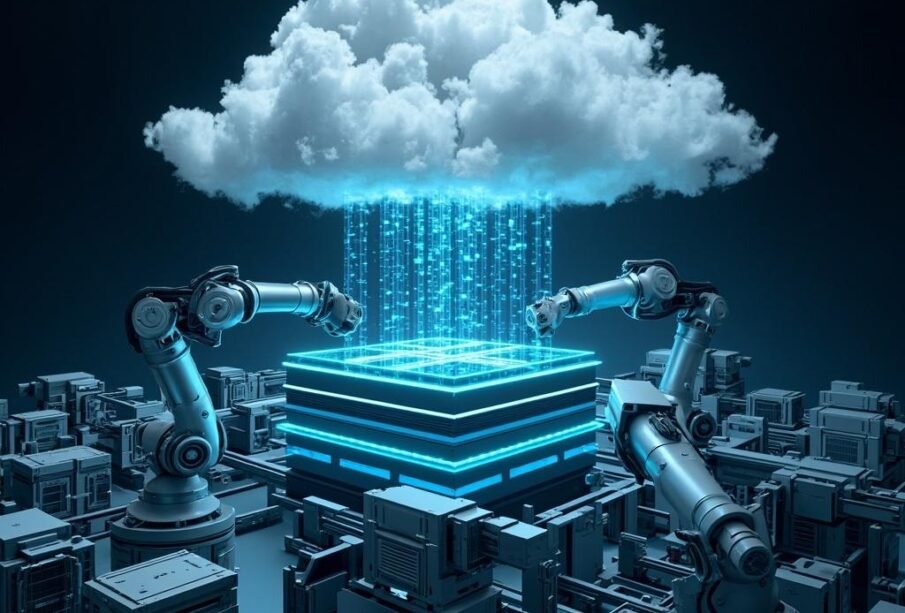
The manufacturing landscape is undergoing a dramatic transformation as industries embrace digitalization and the Industrial Internet of Things (IIoT). At the heart of this revolution lies a critical decision: Should industrial automation systems rely on edge computing, cloud computing, or a strategic combination of both? Understanding the nuanced differences between these technologies has become essential for engineers, plant managers, and decision-makers seeking to optimize their operations, improve efficiency, and maintain competitive advantage in an increasingly connected world.
Understanding Edge Computing in Industrial Automation
Edge computing refers to a distributed computing paradigm that brings computation and data storage closer to the sources of data—in industrial settings, this means directly at the machine level, on the factory floor. Rather than transmitting all data to remote data centers, edge computing processes information locally, enabling real-time decision-making with minimal latency. This approach is particularly crucial in manufacturing environments where milliseconds can determine product quality, worker safety, and operational efficiency.
In industrial automation contexts, edge devices typically include programmable logic controllers (PLCs), industrial PCs, smart sensors, and dedicated edge gateways. These components form a decentralized network architecture that can operate independently or in concert with centralized cloud infrastructure. The proliferation of edge computing in factories addresses several challenges that traditional cloud-only architectures struggle to overcome, particularly regarding latency, bandwidth, and reliability in mission-critical applications.
Understanding Cloud Computing in Industrial Automation
Cloud computing delivers on-demand computing resources—including servers, storage, databases, networking, and software—over the internet. In industrial automation, cloud platforms host sophisticated analytics engines, machine learning models, enterprise resource planning (ERP) systems, and historical data repositories that enable strategic planning and continuous improvement initiatives. Major cloud providers like AWS, Microsoft Azure, and Google Cloud have developed specialized Industrial IoT platforms designed to integrate seamlessly with manufacturing operations.
Cloud computing offers virtually unlimited scalability, enabling manufacturers to process vast amounts of data generated by thousands of sensors and machines across multiple facilities. The centralized nature of cloud infrastructure facilitates easier management, updates, and security patches while providing powerful tools for cross-facility analysis, predictive maintenance modeling, and supply chain optimization. However, the inherent latency of transmitting data to remote servers and back creates limitations for applications requiring instantaneous responses.
Key Technical Differences: Edge vs. Cloud Computing
When evaluating these technologies for industrial automation applications, several critical factors differentiate their performance characteristics and suitability for various use cases.
| Characteristic | Edge Computing | Cloud Computing |
|---|---|---|
| Latency | 1-10 milliseconds | 50-200+ milliseconds |
| Bandwidth Requirements | Low (local processing) | High (continuous data transmission) |
| Data Processing Location | On-premise, near source | Remote data centers |
| Reliability | High (operates offline) | Dependent on connectivity |
| Scalability | Limited by hardware | Virtually unlimited |
| Security Model | Data stays local, reduced exposure | Centralized security, encrypted transfer |
| Cost Structure | Higher upfront, predictable ongoing | Pay-per-use, operational expense |
Advantages of Edge Computing for Manufacturing
Edge computing delivers several compelling benefits that make it indispensable for modern industrial automation deployments:
- Ultra-low latency responses: Critical control loops in robotics, CNC machines, and assembly lines require response times measured in milliseconds. Edge computing eliminates network round-trip delays, enabling real-time control decisions essential for precision manufacturing.
- Operational continuity: Industrial facilities cannot afford production stoppages due to internet outages or cloud service disruptions. Edge systems maintain full functionality during connectivity interruptions, protecting against costly downtime.
- Bandwidth optimization: A single modern factory can generate terabytes of data daily. Edge processing filters, aggregates, and compresses this data before selective transmission, dramatically reducing network costs and congestion.
- Enhanced data sovereignty: Some industries and regions have strict regulations regarding where manufacturing data can be stored. Edge computing keeps sensitive operational data within facility boundaries, simplifying compliance.
- Improved security posture: By processing sensitive data locally and minimizing external data transmission, edge architectures reduce the attack surface available to potential cyber threats.
Advantages of Cloud Computing for Industrial Applications
Cloud computing provides distinct advantages that complement edge capabilities, particularly for strategic and analytical functions:
- Advanced analytics and AI/ML capabilities: Cloud platforms offer unprecedented computational power for training sophisticated machine learning models that predict equipment failures, optimize processes, and identify quality issues.
- Cross-facility visibility: Manufacturers with multiple plants can consolidate data in the cloud for enterprise-wide benchmarking, trend analysis, and standardized performance monitoring.
- Elastic resource allocation: Cloud infrastructure automatically scales computing resources based on demand, eliminating over-provisioning and enabling cost-efficient handling of variable workloads.
- Centralized software management: Updates, patches, and new features deploy seamlessly across all connected facilities without requiring on-site intervention for every change.
- Collaboration and integration: Cloud platforms provide standardized APIs and integration capabilities that facilitate connections with suppliers, customers, and partners across the value chain.
Industrial Use Cases: When to Deploy Each Technology
Edge Computing Ideal Applications
Certain industrial automation scenarios demand the immediate response capabilities that edge computing provides:
- Safety systems: Emergency shutdown systems, machine guarding, and collision prevention require instantaneous responses that cannot tolerate network latency or outage risks.
- Closed-loop process control: Temperature regulation, pressure control, and quality inspection systems operate continuously and require real-time adjustments measured in milliseconds.
- Robotic coordination: Multi-axis robot synchronization, motion planning, and adaptive manufacturing processes depend on low-latency communication between machines.
- Vision-based quality control: High-speed inspection systems analyzing products on moving conveyor belts must make instant accept/reject decisions without cloud round-trips.
Cloud Computing Ideal Applications
Strategic and analytical functions typically leverage cloud computing’s superior processing capabilities:
- Predictive maintenance modeling: Training algorithms on large historical datasets to predict equipment failures benefits from cloud-scale computational resources and storage.
- Production planning and scheduling: Complex optimization problems considering constraints across multiple facilities, suppliers, and time horizons leverage cloud computing’s analytical power.
- Digital twin simulation: Creating and maintaining comprehensive virtual replicas of manufacturing systems requires significant computational resources best provided by cloud infrastructure.
- Regulatory compliance reporting: Aggregating data from multiple sources for environmental reporting, quality documentation, and regulatory submissions benefits from centralized cloud platforms.
⚠️ Critical Consideration
When implementing cloud-connected industrial systems, never delegate safety-critical control functions to cloud infrastructure. Network latency, jitter, and potential outages make cloud-only architectures unsuitable for emergency stop circuits, machine guarding, and other safety systems. These functions must remain on local, hardwired control systems or dedicated edge devices with deterministic response times. Failure to observe this principle can result in catastrophic equipment damage, worker injuries, or fatalities.
The Hybrid Architecture: Best of Both Worlds
The most successful industrial digital transformation strategies recognize that edge and cloud computing are not mutually exclusive but rather complementary technologies. A well-designed hybrid architecture strategically distributes computing workloads based on each technology’s strengths:
| Workload Type | Recommended Location | Rationale |
|---|---|---|
| Safety-critical control | Edge Only | Deterministic response required |
| Real-time process control | Edge Primary |
Post Views: 21
Leave a reply |