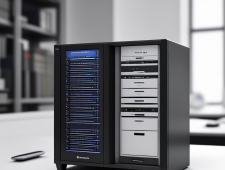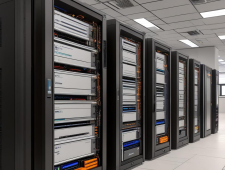

Automating data centers has become a crucial aspect in the modern industrial landscape. It brings numerous potential benefits, yet also presents a series of formidable challenges.
One of the primary challenges lies in the complexity of existing infrastructure. Many data centers have been built over time with various legacy systems and architectures. Integrating new automation technologies into these complex setups is no easy feat. Different components may use different protocols and interfaces, making it difficult to achieve seamless communication and coordination. For example, older servers might not be compatible with the latest automation software, requiring significant retrofitting or replacement. This not only incurs high costs but also disrupts the normal operation of the data center during the transition period.
Another hurdle is the issue of data security. As data centers are automated, more data is being processed and transferred electronically. This increases the risk of cyberattacks. Ensuring the security of automated systems is of utmost importance. Hackers could potentially gain unauthorized access to critical data, disrupt operations, or steal valuable information. Protecting against threats such as malware, ransomware, and unauthorized access requires robust security measures. This includes implementing advanced encryption techniques, regularly updating security patches, and having strict access controls. However, achieving a high level of security in an automated environment is a continuous battle as new threats emerge constantly.
The lack of skilled personnel is also a significant challenge. The successful implementation of data center automation requires professionals with a diverse set of skills. They need to be proficient in areas such as programming, networking, and system administration. There is a shortage of such multi - skilled individuals in the job market. Training existing staff to acquire these skills takes time and resources. Moreover, attracting new talent with the right expertise is also a competitive process. Without a sufficient number of skilled workers, the progress of automating data centers can be severely hampered.
Scalability is another concern. Data centers need to be able to adapt to changing demands. Automating a data center should allow for easy expansion or contraction of resources as required. However, many automation solutions struggle to provide seamless scalability. If the automation system is not designed properly, adding new servers or storage capacity might lead to compatibility issues or performance degradation. This could result in inefficiencies and additional costs in the long run. A scalable automation solution should be able to handle fluctuations in workload without sacrificing performance or security.
Furthermore, the integration of different automation tools can be a nightmare. There are numerous automation tools available in the market, each with its own features and capabilities. Integrating these tools to work together harmoniously is a complex task. Compatibility issues between different tools can lead to data silos and inefficiencies. For instance, one tool might be excellent at server provisioning, while another is great for network configuration. But getting them to communicate and collaborate effectively to achieve end - to - end automation is a challenge that requires careful planning and technical expertise.
In addition, the cost associated with automating data centers is a major consideration. The initial investment in purchasing automation software, hardware, and training staff can be substantial. There are also ongoing costs such as software maintenance and upgrades. Small and medium - sized data centers may find it difficult to justify these costs, especially if they do not see an immediate return on investment. However, without automation, they may face difficulties in competing with larger, more automated data centers in terms of efficiency and cost - effectiveness.
Finally, the impact on existing workflows and operations is a challenge that cannot be overlooked. Automating data centers means changing the way tasks are performed. This can lead to resistance from employees who are used to the old ways of working. There may be concerns about job security or a lack of understanding of how the new automated systems will function. Ensuring a smooth transition and getting employees on board with the changes is essential for the successful implementation of data center automation.
In conclusion, while automating data centers offers great potential for improving efficiency, reducing costs, and enhancing performance, it is not without its challenges. Overcoming these obstacles requires a comprehensive approach that addresses infrastructure complexity, security, skills shortage, scalability, tool integration, cost, and workflow impacts. Only by carefully navigating these challenges can data centers fully realize the benefits of automation in the highly competitive industrial environment.