
Autonics ARIO is a remarkable product that showcases the ability to pack impressive I/O capabilities into a small form factor. This technological marvel has revolutionized the way we perceive and utilize compact devices in various industrial and automation settings.

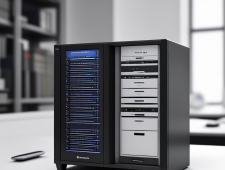
The small form factor of Autonics ARIO is a key advantage. It allows for easy integration into tight spaces where larger counterparts simply won't fit. This means that in complex machinery or confined control panels, ARIO can be seamlessly incorporated without taking up excessive room. This not only saves physical space but also simplifies the overall layout of the system, reducing clutter and making it more efficient.
Despite its small size, Autonics ARIO doesn't compromise on I/O capabilities. It offers a wide range of input and output options. The input channels can receive various types of signals, such as digital, og, or even high-speed pulses. This flexibility enables it to interface with different sensors and devices, accurately capturing data from the environment. Whether it's detecting the position of a mechanical part through a proximity sensor or measuring the temperature with a thermocouple, ARIO can handle these inputs with precision.
On the output side, it can drive different types of loads. Digital outputs can be used to control relays, solenoids, or other digital devices, while og outputs can provide variable voltage or current signals for applications like motor speed control or process regulation. The high-speed output capabilities are also useful for applications that require rapid and precise control, such as in high-speed conveyor systems where quick signal changes are necessary to ensure smooth operation.
One of the significant benefits of Autonics ARIO's I/O capabilities is its adaptability. It can be configured to meet specific requirements of different projects. Engineers and technicians can easily program the device to define which inputs are used for which functions and how the outputs respond based on the input signals. This configurability allows for a customized solution tailored to the unique needs of each application.
In industrial automation, this adaptability is crucial. For example, in a manufacturing plant, ARIO can be set up to monitor the status of multiple production lines. It can receive signals from sensors on the conveyor belts to detect if there are any jams or malfunctions. Based on these inputs, it can then send appropriate control signals to stop or adjust the production process. This real-time monitoring and control function enabled by ARIO's I/O capabilities helps to improve productivity, reduce downtime, and enhance overall quality.
Another aspect that makes Autonics ARIO stand out is its reliability. The compact design doesn't sacrifice durability. It is built to withstand harsh industrial environments, including high temperatures, vibrations, and electromagnetic interference. This ensures that it can operate consistently and accurately over a long period, minimizing the risk of failures that could disrupt operations.
The small form factor also contributes to its portability in some cases. It can be easily moved and installed in different locations within a facility or even transported between different projects. This makes it a versatile choice for companies that may need to reconfigure their automation systems frequently or for those involved in on-site troubleshooting and maintenance.
In conclusion, Autonics ARIO's ability to pack I/O capabilities into a small form factor is a game-changer. It offers a combination of space-saving design, extensive I/O options, adaptability, reliability, and portability. Whether in large-scale industrial plants or smaller automation setups, ARIO provides a powerful and efficient solution for handling input and output tasks, enabling seamless operation and enhanced performance. Its impact on the field of industrial automation and related applications is undeniable, and it will continue to play an important role in driving technological advancements in these areas in the future.