
The Complete End-of-Arm Tooling Guide for Industrial Robots
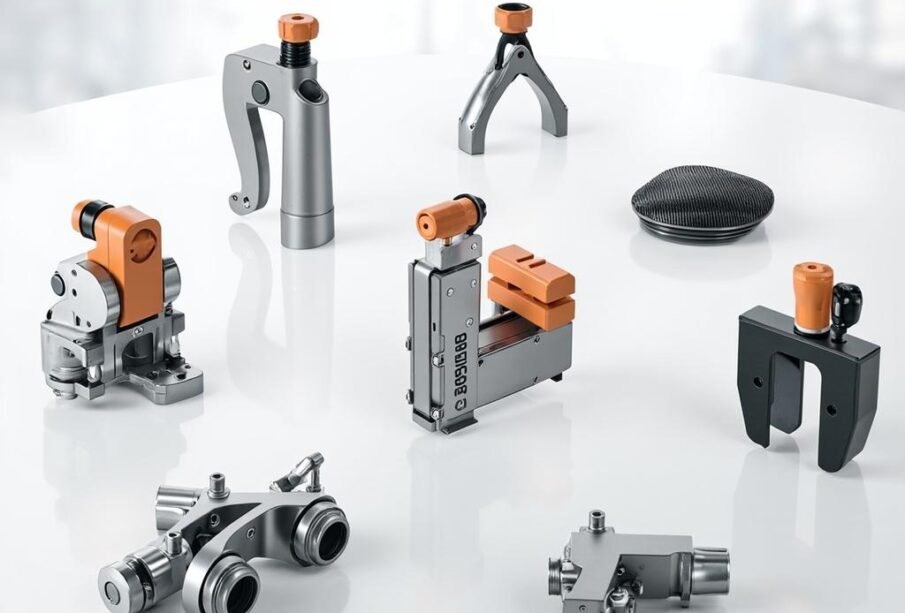
End-of-Arm Tooling (EOAT) represents one of the most critical components in modern industrial automation systems. Often referred to as the “hand” of a robot, EOAT serves as the physical interface between the robotic arm and the workpieces it handles. Whether you are implementing robotic automation for the first time or optimizing an existing system, understanding end-of-arm tooling is essential for achieving peak performance, maximizing return on investment, and ensuring workplace safety. This comprehensive guide explores everything you need to know about industrial robot end-of-arm tooling, from fundamental concepts to advanced selection criteria and best practices.
What is End-of-Arm Tooling?
End-of-arm tooling, commonly abbreviated as EOAT, encompasses all the devices and components attached to the wrist or end effector of an industrial robot. These tools enable robots to interact with objects, perform specific tasks, and execute precise movements within manufacturing and production environments. The sophistication of modern EOAT systems directly correlates with the complexity of tasks robots can accomplish, making proper tooling selection a critical decision point for any automation project.
The evolution of end-of-arm tooling has paralleled advances in robotics technology itself. What began as simple mechanical grippers has transformed into highly specialized systems incorporating advanced sensors, adaptive mechanisms, and integrated control systems. Today’s EOAT solutions can handle objects ranging from delicate electronic components weighing mere grams to heavy automotive parts weighing hundreds of kilograms, all while maintaining precision tolerances measured in fractions of millimeters.
Types of Industrial Robot End-of-Arm Tooling
Selecting the appropriate type of EOAT depends heavily on your specific application requirements, the characteristics of workpieces being handled, and the operational environment. Below is a comprehensive overview of the primary categories of end-of-arm tooling available for industrial robots:
Mechanical Grippers
Mechanical grippers represent the most widely used category of EOAT in industrial applications. These devices utilize opposing fingers or jaws that physically close around a workpiece to secure it during handling operations. Mechanical grippers are available in various configurations, including two-finger, three-finger, and specialized designs optimized for specific geometries. They offer excellent repeatability and are particularly well-suited for applications involving rigid workpieces with consistent dimensions.
Vacuum Grippers
Vacuum grippers employ suction cups and negative pressure systems to lift and hold objects. These tools excel in handling flat, smooth-surfaced materials such as glass sheets, metal plates, plastic panels, and cardboard boxes. Vacuum EOAT systems are valued for their ability to handle multiple items simultaneously and their gentle contact with workpieces, making them ideal for applications where surface damage must be avoided. However, they require smooth, non-porous surfaces and adequate vacuum-generating capability.
Magnetic Grippers
Magnetic grippers utilize permanent magnets or electromagnets to securely hold ferromagnetic materials. These EOAT systems are particularly valuable in metalworking applications, steel fabrication, and automotive manufacturing where workpieces are made of steel, iron, or other magnetic materials. Magnetic grippers offer the advantage of not requiring external power to maintain grip on ferromagnetic objects, though electromagnet-based systems provide the flexibility of releasing objects on demand.
Specialized Tooling Systems
Beyond conventional gripper types, specialized EOAT systems address unique application requirements. Tool changers enable rapid interchangeability between different end-of-arm tools, dramatically increasing robotic system flexibility. Welding torches, spray nozzles, material removal tools, and assembly heads represent application-specific tooling that transforms robots into multi-purpose manufacturing platforms. Collaborative robot (cobot) grippers often incorporate built-in safety sensors and compliant mechanisms designed for human-robot interaction environments.
Key Components of End-of-Arm Tooling Systems
Understanding the constituent components of EOAT systems helps engineers and integrators make informed decisions when specifying or designing robotic end effectors. The following elements represent the core building blocks of most industrial robot tooling configurations:
- Tooling Plate/Flange: The mechanical interface connecting the EOAT to the robot wrist, typically conforming to standardized patterns such as ISO 9409 or proprietary manufacturer specifications.
- Gripper Fingers/Jaws: The contact elements that physically engage with workpieces, available in countless custom profiles and standardized shapes.
- Actuation System: Pneumatic, hydraulic, or electric mechanisms that drive gripper motion, each offering distinct performance characteristics.
- Sensor Integration: Force/torque sensors, proximity sensors, vision systems, and position feedback devices that enable intelligent gripping and process control.
- Cabling and Connections: Electrical wiring, pneumatic tubes, and communication cables routing signals and power to the EOAT.
- Support Structure: Brackets, supports, and structural elements that mount and protect internal components.
EOAT Selection Criteria and Considerations
Choosing the optimal end-of-arm tooling for your robotic application requires careful evaluation of multiple factors. Rushing this critical decision often results in performance shortfalls, premature failures, and unnecessary costs. The following table summarizes the primary selection criteria and their implications:
| Selection Factor | Key Considerations | Impact on Performance |
|---|---|---|
| Payload Capacity | Maximum weight the EOAT can safely handle, including gripper weight | Determines applicability; affects cycle speed and acceleration limits |
| Grip Force | Force applied to secure workpiece; must balance security against damage risk | Critical for reliable handling; impacts part integrity and traceability |
| Part Geometry | Size, shape, weight distribution, and surface characteristics of workpieces | Dictates gripper type, finger design, and approach angles |
| Cycle Time Requirements | Target throughput; acceleration, deceleration, and positioning speeds | Influences actuator selection, sensor integration, and tooling mass |
| Environmental Conditions | Temperature extremes, moisture, dust, chemicals, cleanliness requirements | Determines material selection, sealing requirements, and durability |
| Precision and Repeatability | Positional accuracy, force control, and consistency requirements | Drives sensor requirements and control system complexity |
⚠️ Important Tip:
Never exceed 80% of your gripper’s rated payload capacity. Industry best practices recommend maintaining a safety margin between the actual workpiece weight and the maximum rated capacity of your end-of-arm tooling. This buffer accounts for dynamic forces during acceleration and deceleration, potential variations in part weight, and manufacturing tolerances in the gripper itself. Exceeding recommended payload limits significantly increases the risk of dropped workpieces, equipment damage, and safety incidents.
Common Applications of Industrial Robot EOAT
Industrial robots equipped with specialized end-of-arm tooling serve virtually every manufacturing sector. Understanding the breadth of applications helps identify opportunities for automation within your operations. The following list highlights prevalent EOAT applications across various industries:
- Material Handling and Palletizing: Moving raw materials, work-in-progress items, and finished products throughout production facilities.
- Machine Tending: Loading and unloading CNC machines, presses, injection molding equipment, and other production machinery.
- Assembly Operations: Joining components, inserting fasteners, applying adhesives, and performing precision assembly tasks.
- Packaging and Pick-and-Place: Sorting, orienting, and placing products into packaging containers or onto pallets.
- Quality Inspection: Positioning parts for optical inspection, coordinate measuring machines, and testing equipment.
- Welding and Metal Fabrication: Holding workpieces during arc welding, spot welding, and laser welding operations.
- Surface Treatment: Applying coatings, paints, sealants, and finishing materials with consistent coverage and thickness.
Actuation Methods for Robot Grippers
The mechanism powering gripper motion significantly influences system performance, maintenance requirements, and application suitability. Industrial end-of-arm tooling utilizes three primary actuation methods, each offering distinct advantages and limitations: