
Ultrasonic Sensors for Distance Measurement in Harsh Environments: Selection Guide and Applications
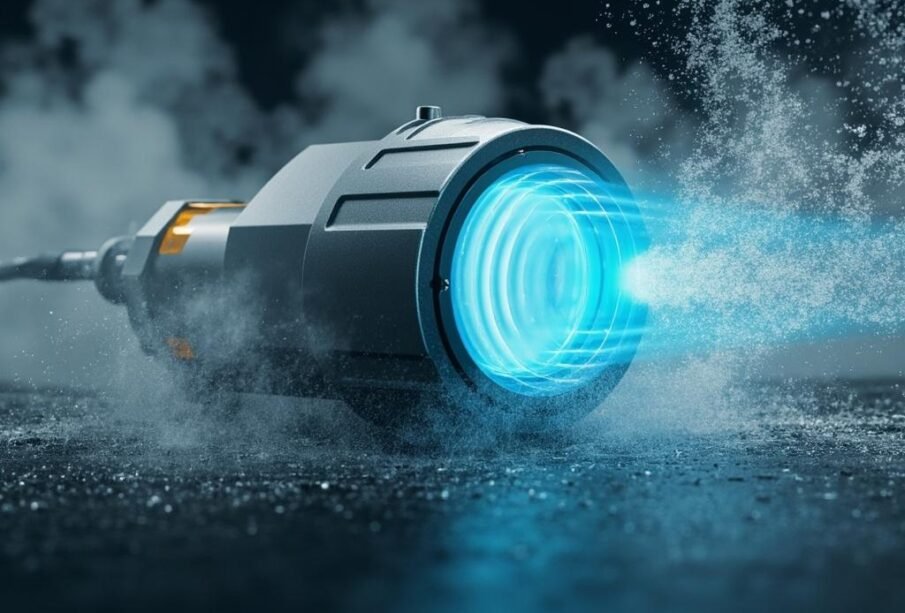
How Ultrasonic Sensors Work in Demanding Conditions
Ultrasonic distance measurement relies on the piezoelectric effect to generate and detect sound waves typically in the 20 kHz to 200 kHz frequency range. The sensor emits ultrasonic pulses that travel through the air until they encounter an object, at which point the sound energy reflects back to the receiver. By calculating the time-of-flight between emission and reception and knowing the speed of sound in the medium, the device can determine distance with remarkable precision. In harsh environments, several factors affect this seemingly straightforward process:- Temperature fluctuations significantly impact the speed of sound, requiring sensors with built-in temperature compensation algorithms
- Air turbulence from industrial fans, HVAC systems, or outdoor winds can scatter sound waves and distort readings
- Ambient noise from machinery may interfere with the sensor’s ability to detect returning echoes
- Humidity and moisture can affect sound propagation and potentially damage unprotected electronics
- Particulate matter such as dust, sawdust, or metal shavings may accumulate on the transducer face
Types of Harsh Environments and Their Challenges
Different industrial and outdoor settings present unique obstacles that sensor manufacturers must address through specialized designs. Understanding these environment categories helps professionals select appropriate equipment for their specific applications.Extreme Temperature Environments
Industrial furnaces, cold storage facilities, and outdoor installations in climates with significant temperature variation require sensors capable of operating across wide ranges. Standard ultrasonic sensors typically function between -10°C and 50°C, but specialized industrial models extend this range from -40°C to over 85°C. These extended-range sensors employ temperature-stable piezoelectric materials and sophisticated compensation algorithms that continuously adjust calculations based on ambient temperature readings.Corrosive and Chemical Environments
Chemical processing plants, wastewater treatment facilities, and marine applications expose sensing equipment to aggressive substances that rapidly degrade standard components. Sensors intended for these environments feature corrosion-resistant housings constructed from materials such as stainless steel 316L, PVDF (polyvinylidene fluoride), or engineered polymers that withstand exposure to acids, bases, salts, and other reactive chemicals. The transducer surfaces receive special coatings that prevent chemical attack while maintaining optimal acoustic transmission.High-Dust and Particulate Environments
Woodworking shops, mining operations, grain handling facilities, and concrete manufacturing generate airborne particles that can coat sensor surfaces and obscure sound waves. Air purge systems maintain a protective flow of clean air across the transducer face, preventing particle accumulation. Some industrial sensors incorporate self-cleaning transducer designs or include integrated air nozzles for continuous purge functionality.Key Specifications for Harsh Environment Selection
When evaluating ultrasonic sensors for demanding applications, several technical specifications merit careful attention. The following table summarizes critical parameters and recommended values for industrial applications:| Specification | Standard Range | Harsh Environment Recommended | Notes |
|---|---|---|---|
| Ingress Protection | IP65 | IP67 to IP69K | Higher ratings for complete dust and moisture protection |
| Temperature Range | -10°C to 50°C | -40°C to 85°C | Extended range with compensation |
| Housing Material | ABS plastic | 316 SS, PVDF, PTFE | Corrosion resistance critical |
| Measurement Range | 10mm – 4m | Up to 10m or more | Varies by application requirements |
| Output Options | Analog, digital | Analog, digital, IO-Link | IO-Link for smart integration |
| Response Time | 50ms – 100ms | As low as 10ms | Faster for moving targets |
Industrial Applications of Harsh Environment Ultrasonic Sensors
The versatility and reliability of modern ultrasonic distance sensors enable their deployment across numerous industries where environmental conditions would quickly compromise competing technologies.- Level Measurement in Tanks and Silos — Chemical storage tanks, aggregate silos, and liquid reservoirs benefit from non-contact level monitoring that withstands corrosive vapors and temperature extremes. Ultrasonic sensors mounted above containers measure the distance to the material surface, providing accurate volume calculations without exposure to the stored substance.
- Wastewater and Water Treatment — Open channels, settling tanks, and lift stations expose equipment to moisture, hydrogen sulfide gas, and biological growth. Sealed ultrasonic sensors with anti-corrosion coatings provide reliable flow measurement and level control in these challenging conditions.
- Aggregate and Mining Operations — Conveyor belt monitoring, stockpile level detection, and crusher clearance measurement require sensors that tolerate dust, vibration, and abrasive particles. Models with integrated air purges maintain clear transducer faces despite heavy particulate loads.
- Automotive Manufacturing — Paint shops, engine assembly lines, and body shops subject sensors to chemical overspray, extreme temperatures during curing processes, and high humidity. Industrial ultrasonic sensors provide non-contact positioning and presence detection that survives these harsh conditions.
- Agricultural Processing — Grain dryers, feed mills, and agricultural storage facilities generate dusty environments with significant temperature variations between seasons. Robust ultrasonic sensors measure grain levels and monitor equipment clearance without damage from debris or moisture.
- Marine and Offshore Applications — Salt spray, high humidity, and saltwater corrosion demand sensors constructed from marine-grade materials. Ship hull monitoring, dock positioning systems, and offshore platform applications rely on sealed stainless steel or specialized polymer housings that resist deterioration.
Installation Best Practices for Maximum Reliability
Proper installation significantly impacts the performance and longevity of ultrasonic sensors in harsh environments. Following established guidelines ensures accurate measurements and minimizes maintenance requirements.Mounting considerations play a crucial role in sensor performance. Install sensors perpendicular to the target surface whenever possible to maximize echo return strength. Ensure adequate clearance around the sensor to prevent interference from nearby objects or structural elements. For outdoor installations, consider protective shrouds that shield the sensor from direct sunlight, precipitation, and wind while maintaining acoustic accessibility.
Cable routing and connection protection extend sensor lifespan in challenging conditions. Use sealed cable glands and appropriate conduit to prevent moisture wicking along conductors. Where chemical exposure is likely, employ sensor cables with chemically resistant jackets. Terminate connections in appropriately rated enclosures that provide access for maintenance while preventing environmental ingress.
Environmental monitoring and calibration maintain measurement accuracy over time. While modern sensors include automatic temperature compensation, periodic verification against known reference targets ensures continued precision. In rapidly changing temperature environments, consider sensors with continuous temperature probe integration that updates compensation calculations in real time.
Advantages and Limitations of Ultrasonic Technology
Understanding both the strengths and constraints of ultrasonic distance measurement helps professionals make informed equipment selections for their specific applications.| Advantages | Limitations |
|---|---|
| Non-contact measurement eliminates wear from moving parts | Minimum sensing distance typically 20-50mm due to dead zone |
| Insensitive to target color, transparency, or surface finish | Performance degrades with soft, sound-absorbing targets |
| Works reliably in dusty, dirty environments when properly sealed | Heavy rain, snow, or dense fog can block or scatter signals |
| Simple, cost-effective solution compared to radar or laser | Lower precision than laser-based alternatives |
| Wide beam angle simplifies target acquisition | May detect nearby objects unintentionally in cluttered spaces |
| Intrinsically safe options available for explosive atmospheres | Temperature extremes require careful model selection |


