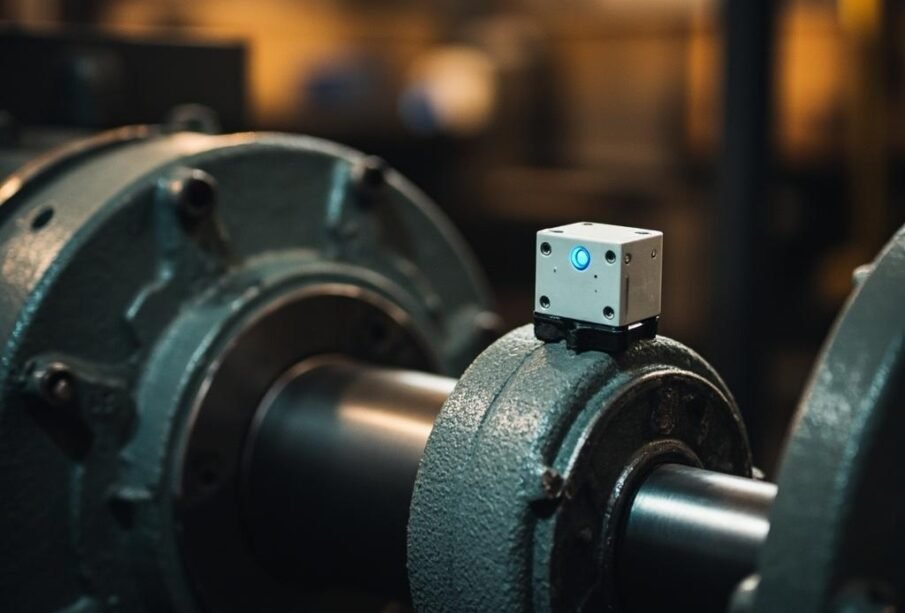
The industrial automation landscape is undergoing a significant transformation with the emergence of IO-Link Wireless technology, which is revolutionizing how sensors communicate in challenging environments. Among its most compelling applications is the deployment of wireless sensors in rotating machinery, where traditional wired solutions have long presented engineering challenges, maintenance bottlenecks, and operational limitations. This comprehensive article explores how IO-Link Wireless is addressing these issues and enabling unprecedented flexibility and efficiency in rotating applications across industries ranging from manufacturing and automotive to aerospace and renewable energy.
Understanding IO-Link Wireless Technology
IO-Link is an internationally standardized point-to-point communication protocol (IEC 61131-9) designed to connect sensors and actuators to automation systems. The wireless extension of this technology, IO-Link Wireless, maintains all the benefits of the wired version while eliminating the physical connection constraints. Operating in the 2.4 GHz ISM frequency band with a robust protocol stack, IO-Link Wireless enables reliable, real-time communication with latency as low as 5 milliseconds, making it suitable for demanding industrial applications including rotating equipment monitoring.
The technology supports data rates up to 230.4 kbit/s with a range of approximately 20 meters in typical industrial environments. What sets IO-Link Wireless apart is its ability to maintain stable communication despite physical rotation, metal obstructions, and electromagnetic interference commonly found in manufacturing facilities. The protocol incorporates frequency hopping and error correction mechanisms that ensure data integrity even in the most challenging conditions.
Why Rotating Applications Present Unique Challenges
Rotating machinery has always posed significant challenges for industrial sensor deployment. Traditional solutions rely on slip rings, wireless telemetry systems, or rotary unions, each bringing their own set of limitations. Slip rings suffer from mechanical wear, limited bandwidth, and require regular maintenance. Wireless telemetry systems often lack the real-time capabilities needed for closed-loop control applications and can be prohibitively expensive for distributed sensor networks.
Common Rotating Applications Affected
- Electric motors and generators requiring continuous temperature, vibration, and current monitoring
- Rotating kilns and dryers in cement, mining, and chemical processing industries
- Wind turbine main shafts needing real-time condition monitoring
- Printing presses and converting equipment with demanding speed and alignment sensors
- Rotary tables and indexers in automated assembly systems
- Turbomachinery including compressors, turbines, and pumps
Key Benefits of IO-Link Wireless in Rotating Environments
Implementing IO-Link Wireless for rotating sensors delivers substantial advantages that directly impact operational efficiency, maintenance costs, and system reliability. The following table summarizes the primary benefits compared to conventional solutions:
| Benefit Category |
Traditional Solutions |
IO-Link Wireless |
| Installation Complexity |
High – requires slip rings, rotary unions |
Low – wireless point-to-point link |
| Maintenance Requirements |
Frequent – mechanical wear on components |
Minimal – no moving parts in signal path |
| Data Bandwidth |
Limited by slip ring design |
Up to 230.4 kbit/s per connection |
| System Reliability |
Degrades over time with wear |
Consistent throughout equipment lifecycle |
| Cost of Ownership |
Higher due to maintenance and replacement |
Lower total cost with extended reliability |
Technical Implementation Considerations
Successfully deploying IO-Link Wireless sensors on rotating equipment requires careful planning and attention to several technical factors. Understanding these considerations will help ensure optimal performance and reliable operation in your specific application.
Communication Architecture
The IO-Link Wireless system consists of three primary components working in concert. The IO-Link Wireless Master serves as the gateway, connecting to the automation network (PROFINET, EtherNet/IP, Modbus TCP, etc.) while managing wireless communication with all associated sensors. IO-Link Wireless Devices (sensors) operate autonomously on the rotating element, requiring only power to function. The configuration software enables parameterization, diagnostics, and system monitoring from a central location.
Power Supply Solutions for Rotating Elements
One of the most critical aspects of implementing wireless sensors on rotating equipment is ensuring reliable power delivery. Several approaches have proven effective in industrial applications:
- Inductive power transfer systems that transfer energy through the air gap without physical contact
- Battery-powered sensors with extended life spans (typically 2-5 years depending on duty cycle)
- Energy harvesting solutions using vibration or thermal gradients to supplement battery life
- Rotary transformer combinations where needed for higher power requirements
⚠️ IMPORTANT TIP:
When deploying IO-Link Wireless sensors on rotating equipment, always perform a site-specific radio frequency (RF) survey before final installation. Metal structures, reflective surfaces, and competing wireless systems can significantly impact communication reliability. Document the exact mounting positions and verify signal quality during commissioning with the equipment running at normal operating speeds.
Sensor Types Compatible with IO-Link Wireless
IO-Link Wireless technology supports a comprehensive range of sensor types, making it suitable for virtually any monitoring requirement in rotating applications. The standardized communication protocol ensures compatibility across manufacturers and sensor types.
| Sensor Category |
Measurement Parameters |
Typical Applications |
| Temperature Sensors |
Bearing temp, winding temp, ambient |
Motor monitoring, gearbox protection |
| Vibration Sensors |
Velocity, acceleration, displacement |
Predictive maintenance, balance detection |
| Proximity Sensors |
Position, speed, revolution counting |
Indexing, synchronization, positioning |
| Pressure Sensors |
Fluid pressure, differential pressure |
Hydraulic systems, lubrication monitoring |
| Current/Voltage Sensors |
Electrical parameters, power consumption |
Motor condition monitoring, efficiency analysis |
Industry-Specific Use Cases
Post Views: 14