When it comes to industrial automation, selecting the right robot type can significantly impact your production efficiency, operational costs, and long-term competitiveness. Articulated, SCARA, and Delta robots represent three of the most widely deployed robotic configurations in modern manufacturing facilities. Each offers distinct advantages and limitations that make them better suited for specific applications. Understanding these differences is crucial for engineers, plant managers, and decision-makers who want to optimize their automation investments. This comprehensive guide examines the characteristics, capabilities, and ideal use cases for each robot type, helping you make an informed decision tailored to your operational requirements.
Understanding Articulated Robots
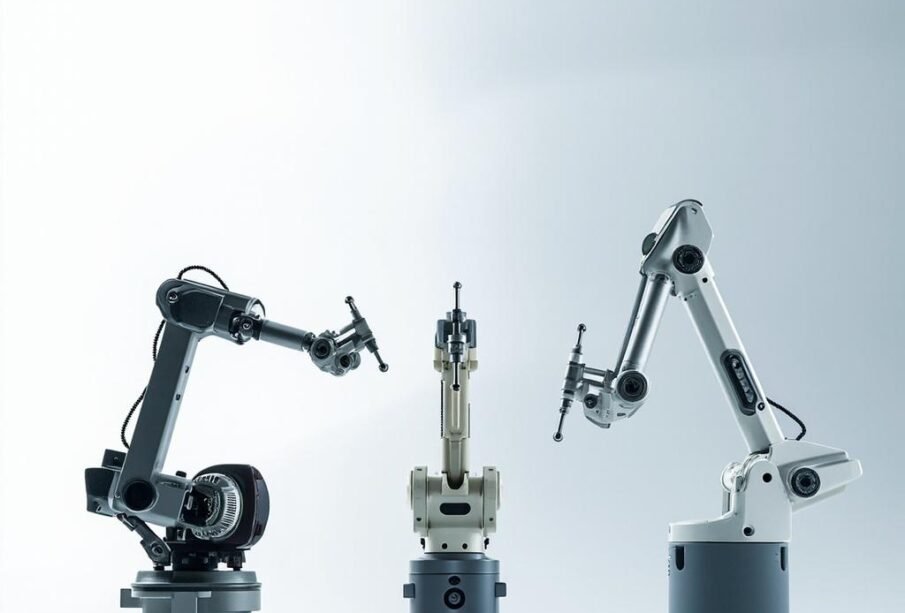
Articulated robots, also known as 6-axis or serial arm robots, feature multiple rotary joints that provide exceptional flexibility and range of motion. These robots mimic the human arm structure, typically consisting of a base, shoulder, elbow, and wrist assembly. The rotational joints allow movement in multiple planes, making articulated robots the most versatile option available in industrial automation.
The primary advantages of articulated robots include their superior reach and dexterity. With six or more axes of freedom, these robots can access workpieces from virtually any angle, making them ideal for complex assembly tasks, welding operations, and material handling applications. Their payload capacity typically ranges from small payloads of 3-5 kg up to massive industrial arms capable of handling over 1,000 kg. Modern articulated robots also feature advanced servo controls and path accuracy that meet stringent quality standards in aerospace, automotive, and medical device manufacturing.
Key Characteristics of Articulated Robots
- 6+ axes of rotation providing maximum flexibility and workspace coverage
- Large work envelope suitable for large workpieces and complex trajectories
- High positioning accuracy typically within ±0.02mm to ±0.05mm
- Wide payload range from lightweight to heavy industrial applications
- Complex programming requirements but highly adaptable to changing tasks
- Longer cycle times compared to specialized robot configurations
Exploring SCARA Robots
SCARA robots (Selective Compliance Assembly Robot Arm) are specifically engineered for high-speed, precision assembly operations. These robots feature a unique design with two parallel rotary joints providing movement in the X-Y plane, combined with a linear actuator for Z-axis motion. This configuration offers rigidity along the vertical axis while allowing compliant movement horizontally, hence the name “selective compliance.”
The SCARA architecture excels in applications requiring fast, repetitive pick-and-place operations and precision assembly. Their mechanical simplicity results in faster cycle times compared to articulated robots, with some high-performance SCARA systems achieving cycle times under 1 second for standard operations. Electronics manufacturing, pharmaceutical packaging, and automotive component assembly heavily rely on SCARA technology due to its perfect balance of speed, precision, and cost-effectiveness.
Key Characteristics of SCARA Robots
- 4-axis design optimized for planar motion and vertical insertion tasks
- Exceptional speed with cycle times up to 3x faster than articulated robots
- High precision achieving repeatability of ±0.01mm or better
- Compact footprint ideal for integration into existing production lines
- Lower cost compared to articulated and Delta configurations
- Limited vertical reach and constrained work envelope
Analyzing Delta Robots
Delta robots, also known as parallel kinematics robots, feature a unique design with three arms connected to a single base-mounted platform. This parallel configuration creates a spider-like appearance and delivers exceptional speed and acceleration capabilities that surpass all other robot types. Originally developed in Switzerland for food packaging applications, Delta robots have become essential in high-speed pick-and-place operations across numerous industries.
The parallel arm design allows Delta robots to achieve cycle rates exceeding 200 picks per minute in some configurations, making them the fastest robotic solution available. Their lightweight construction and efficient motion dynamics result in minimal inertia effects, enabling rapid acceleration and deceleration. Delta robots are mounted overhead, creating an unobstructed workspace beneath the end-effector platform that simplifies material handling and conveyor integration. However, their design imposes limitations on payload capacity and vertical reach that must be carefully considered during selection.
Key Characteristics of Delta Robots
- Parallel kinematics providing unmatched speed and acceleration
- Overhead mounting maximizing floor space utilization
- Limited payload capacity typically ranging from 1kg to 50kg
- Restricted vertical travel due to arm geometry constraints
- Excellent repeatability maintaining consistent placement accuracy
- Specialized applications excelling in high-volume, lightweight product handling
Comparative Analysis: Technical Specifications
To facilitate a clear understanding of the differences between these robot types, the following table presents a side-by-side comparison of their key technical specifications and performance characteristics:
| Specification |
Articulated |
SCARA |
Delta |
| Typical Axes |
4-6 axes |
4 axes |
3-4 axes |
| Payload Capacity |
1kg – 1300kg |
1kg – 50kg |
1kg – 50kg |
| Repeatability |
±0.02mm – ±0.1mm |
±0.01mm – ±0.05mm |
±0.05mm – ±0.1mm |
| Cycle Speed |
Moderate |
High |
Very High |
| Work Envelope |
Large, spherical |
Cylindrical |
Inverted cone |
| Cost Range |
$25,000 – $500,000+ |
$15,000 – $150,000 |
$20,000 – $200,000 |
| Best For |
Complex tasks, welding, large parts |
Assembly, insertion, packaging |
High-speed picking, food handling |
⚠️ Important Selection Tip: When evaluating robots for your application, consider not just current requirements but also future scalability. Investing in a robot with slightly higher capabilities than currently needed can prevent costly upgrades as production demands evolve. Always conduct a thorough task analysis and consult with robot integrators before making final purchasing decisions.
Application-Specific Selection Criteria
Choosing the optimal robot type requires careful analysis of your specific application requirements. Different industries and production scenarios demand different robotic capabilities, making it essential to match robot characteristics with operational needs rather than assuming one type fits all situations.
When to Choose Articulated Robots
Articulated robots should be your default choice for complex, multi-faceted operations that require reaching around obstacles or accessing workpieces from multiple angles. These robots excel in automotive manufacturing for tasks such as spot welding, painting, and large component assembly. Their ability to operate in confined spaces while maintaining precise control