
Power Supply Selection Guide for PLCs, Sensors, and Actuators
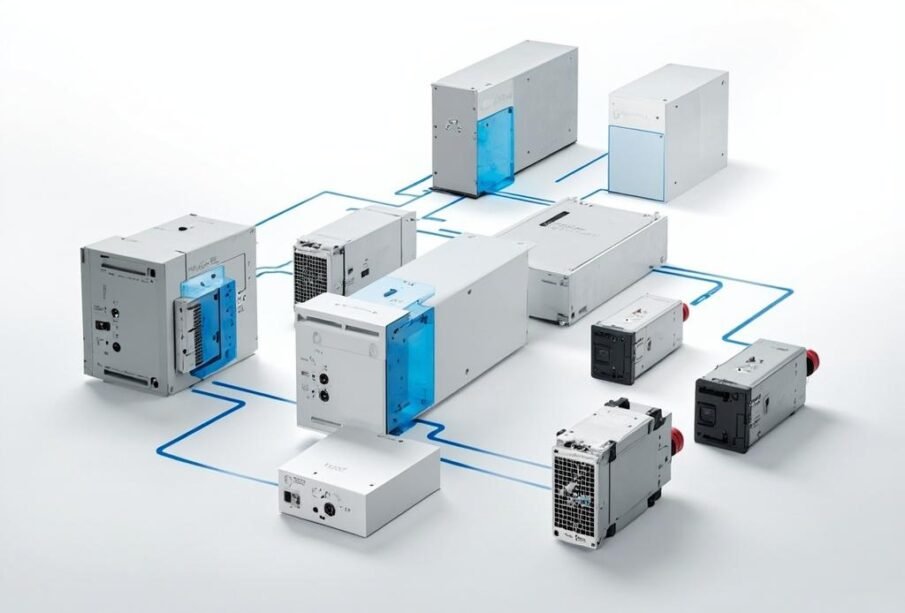
Selecting the appropriate power supply for Programmable Logic Controllers (PLCs), sensors, and actuators is one of the most critical decisions in industrial automation system design. An undersized power supply can cause erratic behavior, system failures, and unexpected downtime, while an oversized unit represents unnecessary cost and reduced efficiency. This comprehensive guide provides engineering professionals, automation specialists, and industrial electricians with the knowledge necessary to make informed power supply selections that ensure reliable, efficient, and safe operation of their control systems.
Understanding Power Supply Fundamentals in Industrial Automation
Industrial automation systems rely on electrical power to function correctly, but the electrical environment in manufacturing facilities presents unique challenges. Power fluctuations, electromagnetic interference, voltage sags, and electrical noise are common occurrences that can compromise system reliability. A properly selected power supply acts as a buffer between the raw mains power and sensitive electronic components, providing stable, clean power that protects your PLC, sensors, and actuators from damage while ensuring consistent, predictable performance.
Key Parameters Every Engineer Must Consider
When evaluating power supplies for industrial applications, several fundamental parameters demand careful attention:
- Output Voltage: Must match the nominal voltage requirements of all connected devices, typically 24V DC for most industrial sensors and small actuators
- Output Current Capacity: Must exceed the total current draw of all connected loads by an appropriate safety margin
- Input Voltage Range: Should accommodate mains voltage variations common in industrial environments
- Power Rating: Expressed in watts, this determines the maximum power the supply can deliver continuously
- Efficiency: Higher efficiency means less heat generation and lower operating costs
- Isolation: Galvanic isolation between input and output protects against ground loops and transient voltages
PLC Power Supply Requirements and Specifications
Programmable Logic Controllers are the brain of any automation system, and their power supply requirements are particularly demanding. PLCs typically operate on 24V DC, although some modules may require different voltages. The power supply must provide clean, stable power that meets the PLC manufacturer’s exact specifications to ensure reliable operation of the CPU, memory, communication modules, and input/output interfaces.
Calculating PLC Power Requirements
Determining the correct power supply size for a PLC system requires summing the power consumption of all individual components. The following table provides typical power consumption figures for common PLC components:
| PLC Component | Typical Current Draw | Power Consumption | Notes |
|---|---|---|---|
| CPU Module | 200-500 mA | 5-12 W | Varies by manufacturer and model |
| Digital Input Module (16 channels) | 50-150 mA | 1.2-3.6 W | Excludes field device power |
| Digital Output Module (16 channels) | 100-300 mA | 2.4-7.2 W | Excludes load switching power |
| Analog Input Module (4 channels) | 50-100 mA | 1.2-2.4 W | Sensor excitation included |
| Communication Module (Ethernet/Profibus) | 100-250 mA | 2.4-6 W | Depends on protocol and features |
Best Practice: Always consult the specific manufacturer’s documentation for accurate power consumption figures. When calculating total power requirements, add a safety margin of at least 25% to account for inrush currents, future expansion, and component aging.
Sensor Power Supply Selection Criteria
Industrial sensors represent a diverse category of devices with varying power requirements. From simple proximity switches to complex machine vision systems, each sensor type has specific electrical requirements that must be satisfied for accurate and reliable operation. Understanding these requirements is essential for selecting a power supply that maintains measurement accuracy and extends sensor operational life.
Common Industrial Sensor Types and Power Requirements
| Sensor Type | Typical Voltage | Current Draw | Special Considerations |
|---|---|---|---|
| Inductive Proximity Switch | 10-30V DC | 5-15 mA | Low current, PNP or NPN output |
| Capacitive Proximity Switch | 10-30V DC | 10-20 mA | Sensitive to humidity and material buildup |
| Photoelectric Sensor | 10-30V DC | 15-50 mA | LED or laser; higher current for LED types |
| Analog Pressure Transducer | 12-24V DC | 20-50 mA | Requires stable voltage for accurate output |
| Temperature Sensor (RTD/Pt100) | 10-30V DC | 4-20 mA loop | 2-wire, 3-wire, or 4-wire configurations |
| Encoder (Incremental) | 12-24V DC | 50-150 mA | Quadrature output; often has line driver |
| Machine Vision Camera | 12-24V DC or PoE | 200-1000 mA | Higher power for illumination integrated units |
Actuator Power Supply Considerations
Actuators convert electrical signals into mechanical motion, and they typically require significantly more power than sensors or PLC components. Solenoid valves, pneumatic cylinders, hydraulic systems, electric motors, and servo drives all have distinct power characteristics that influence power supply selection. Understanding actuator power requirements is crucial because these devices often represent the largest electrical loads in an automation system.
Actuator Power Consumption Overview
| Actuator Type | Typical Voltage |
|---|